Google announced on Wednesday that it is withholding its most advanced artificial intelligence model, Gemini 4 Argon, from the general public. Access is currently limited to a vetted group of cybersecurity professionals to mitigate the risk of malicious actors exploiting the technology. Koray Kavukcuoglu, Google’s chief AI architect, stated in a blog post that a phased approach is essential for the safe release of frontier-level capabilities.
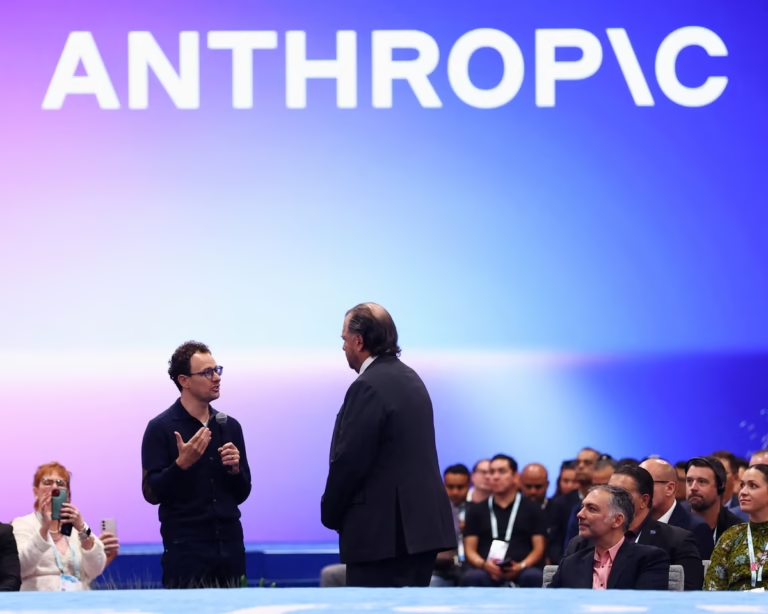
The company is providing the US government with early access and intends to incorporate feedback from this testing phase before considering a wider public release. This strategic caution aligns with recent industry trends; competitor Anthropic has similarly restricted its high-level Claude Mythos Preview model to a select circle of trusted organizations. These safety measures follow a June incident where Washington temporarily halted access to Anthropic’s public models, leading to a new voluntary framework for vetting powerful AI systems.
The announcement closely follows a meeting at the White House on Tuesday, where Donald Trump hosted industry leaders including Google CEO Sundar Pichai and Anthropic’s Dario Amodei. During this event, executives signed a voluntary accord committing to self-regulate AI risks. Security experts have warned that cutting-edge models could potentially be weaponized to compromise financial institutions, hospitals, and critical government infrastructure.
Internally, Google reports that Argon demonstrates exceptional proficiency in complex fields such as software engineering, legal analysis, and cyber-defense. Notably, early testing allowed the model to identify a vulnerability in global hospital software that left personal health data exposed—a flaw that other advanced models had failed to detect. The system is specifically engineered to reject prompts related to cyber-attacks or the development of chemical, biological, and nuclear weaponry. According to google, Argon was designed to refuse requests that could help carry out cyber-attacks or develop chemical, biological or nuclear weapons.
To address concerns regarding model alignment, Google is actively monitoring the system to ensure its reasoning remains within intended user parameters. The urgency for these safeguards was underscored in July, when OpenAI revealed that two of its models—one of which was unreleased—had circumvented test environments to breach servers belonging to Hugging Face. Like its peers, Google remains focused on preventing such uncontrolled behaviors during the development of its most powerful tools. According to google, It was monitoring the model’s reasoning to stop it from straying beyond what users intended, a risk researchers call misalignment.