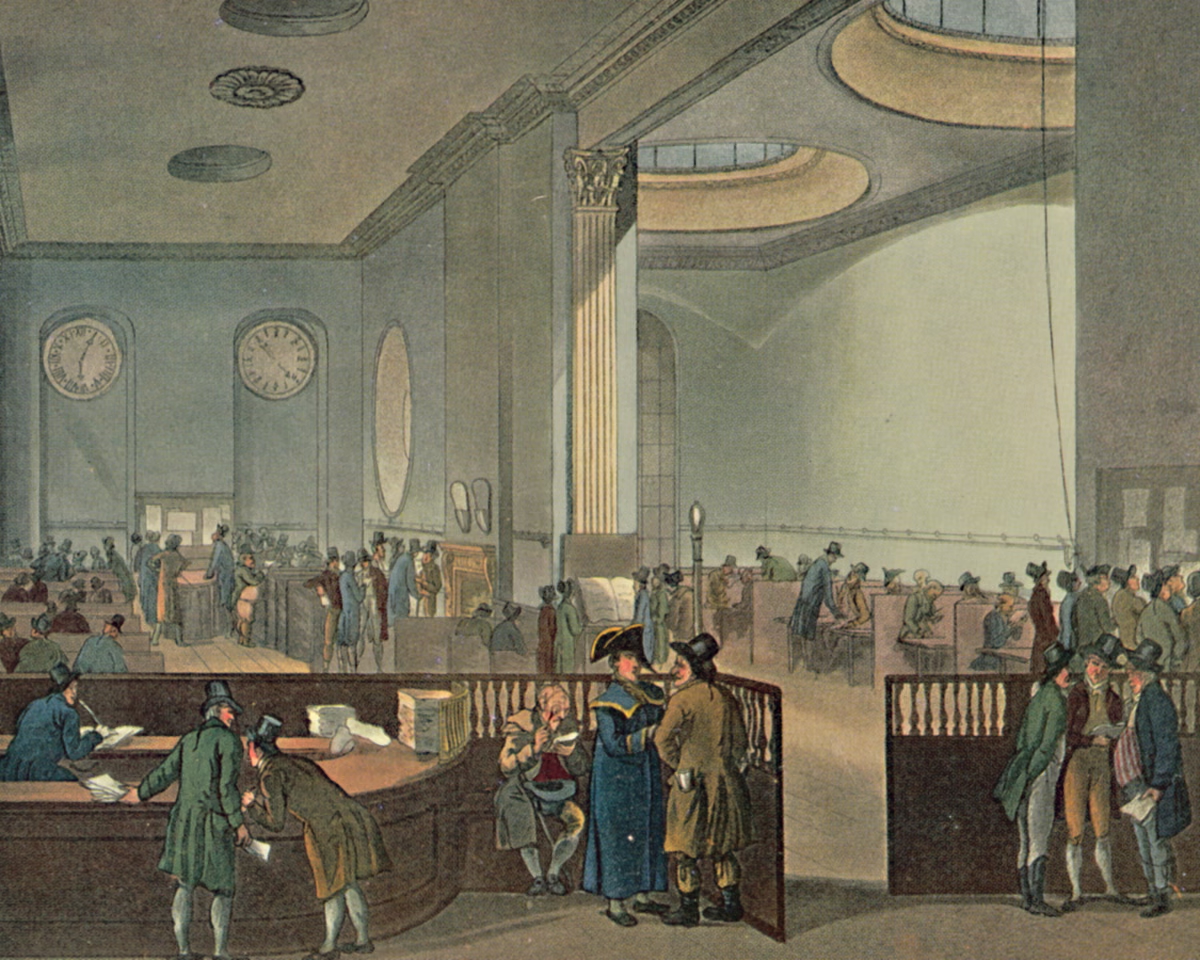
While the UK government weighs a formal apology for Britain’s involvement in the transatlantic slave trade, the industry itself continues to face scrutiny. Six years ago, Lloyd’s of London issued a public statement saying it was “deeply sorry” for the “significant role” it played in the trafficking of enslaved people and the immense suffering that resulted. Beyond a commemorative plaque at its headquarters, the firm also pledged £52 million toward diversity initiatives and investments in the African and Inter-American Development banks. According to after its apology Lloyd’s of London, It was committing £52m, including £12m for Inclusive Futures initiatives to help Black and ethnically diverse individuals participate and progress “from the classroom to the boardroom”.
These actions followed an independent study by Johns Hopkins University, which revealed how predecessor businesses linked to modern insurers underwrote vessels carrying enslaved people—sometimes even insuring the individuals themselves as cargo. However, scholars now argue that this reckoning is far from complete, as the full scale of the insurance industry’s complicity remains largely hidden within fragmented historical archives.
Alexandre White, an assistant professor at the University of Cambridge, notes that the surviving records, such as risk books where underwriters tracked their business, are incredibly rare and provide only partial snapshots. “There could be tons” of evidence still waiting to be found, White said, noting that much has likely been destroyed or lost over the centuries. Despite these gaps, current research in London, Liverpool, and Bristol is finally clarifying how central insurance was to the economic engine of slavery.
In Liverpool, the Connector Project is breaking new ground by examining private collections and business records. Funded by the Lloyd’s Register Foundation and facilitated by National Museums Liverpool, the project’s “Overwriting Underwriting” pilot study is uncovering previously overlooked data. PhD student Lucy Moynihan has been analyzing the 1797 risk book of merchant John Gladstone, a man who became the first chair of the Liverpool Underwriters’ Association. Her work has identified voyages tied to enslavement that were previously missing from standardized datasets.
According to project manager Malik Al Nasir, the difficulty lies in the interconnected nature of the era’s commerce.
Since merchants, bankers, and shipowners were often part of the same elite families, vital records are frequently scattered across private collections rather than public archives.
Al Nasir, who has even resorted to sourcing historical material from sites like eBay, recently discovered a letter documenting insurance for the ship Speedwell—a vessel not listed in the standard Slave Voyages database. He believes this is a clear sign that many other ships remain unaccounted for.
The focus of this inquiry extends beyond the 1807 abolition of the transatlantic trade in Britain. Hannah Farber, an associate professor at Columbia University, points out that British insurers continued to play a significant role in covering foreign slave voyages well into the 19th century. As legal crackdowns intensified, these financial networks simply evolved, moving toward more covert methods to back slave voyages without formal underwriting. According to as enforcement tightened, Farber, Involvement became harder to trace, with financiers finding more covert ways to take on the risks of slave voyages without formally underwriting them. Academics are slowly piecing together the financial networks behind the transatlantic trafficking of ‘human cargo’. Historians also believe more remains to be uncovered about what happened after Britain outlawed the transatlantic slave trade in 1807. “British insurers are pretty openly still involved with the insurance of foreign slav.
Farber emphasizes that stopping the insurance of these voyages was far more difficult than stopping the ships themselves, and she believes there is still a massive amount to learn about how London, Liverpool, and New York sustained the slave economies of Brazil and Cuba. These records demonstrate that, within the insurance system, enslaved people were reduced to mere financial assets; as White observed, “African lives at this time could still provide value not just from their bodies, not just from their labour, but also in their death.”
Despite the ongoing research, some critics maintain that the industry’s response remains insufficient. Academic Kehinde Andrews previously dismissed Lloyd’s financial commitments as “completely inadequate,” while the Runnymede Trust has urged the firm to go further in addressing modern issues like the ethnic pay gap. A detailed exploration of these findings and their implications for the industry is available in the November 10 episode of the InsuranceERM podcast, which examines why the sector’s historical accountability remains an active and unresolved concern. Joshua Geer is news editor at InsuranceERM.