The European Union’s IT agency, EU-Lisa, has launched a lawsuit against a consortium tasked with implementing the bloc’s Entry/Exit System (EES). The legal action, directed at IBM, the French technology firm Atos, and Italian defense contractor Leonardo, follows significant delays in the delivery of the digital border-management platform. An internal document has revealed, the EU has filed a lawsuit against IBM and two other companies involved in its troubled border-management system.
According to EU-Lisa’s annual accounts, the agency activated legal and contractual remedies to defend its financial interests after the consortium failed to meet project timelines. The claim was formally submitted on December 22, 2025, to a court in Estonia, where the agency maintains its headquarters. The European Commission has clarified that it is not a party to the litigation, noting that the dispute strictly concerns development-phase delays rather than current operations.
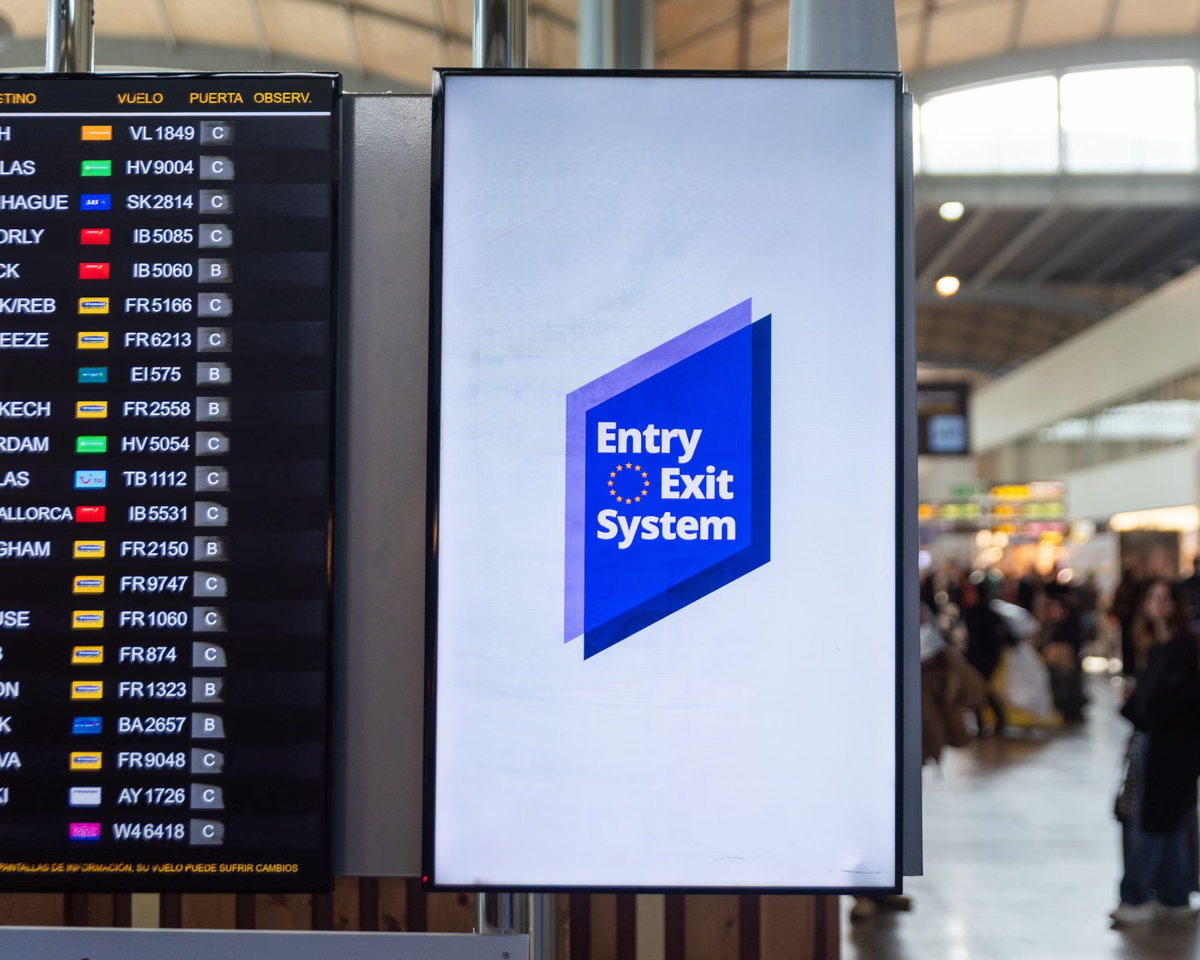
The EES, which officially launched in October 2025, has encountered numerous technical and logistical challenges since its inception. Reports indicate that travelers have faced long waiting times during peak periods, with some passengers missing flights due to malfunctioning kiosks and recurring system outages, exacerbated by border staff shortages.
Despite the ongoing legal proceedings, EU-Lisa maintains that the EES is fully operational and that the lawsuit does not impact the system’s current function. The agency declined to provide further details regarding the specific allegations, while Atos has opted not to comment on the matter.
The EES functions as a security mechanism for individuals entering the EU from outside the border-free travel zone. It requires non-citizens of the 29 Schengen countries, Ireland, and Cyprus to provide fingerprint scans and facial photographs for entry. The Schengen area includes 25 of the 27 EU member states, along with Iceland, Liechtenstein, Norway, and Switzerland. According to travellers’ faces have to be photographed and fingerprints scanned before they are allowed into the Schengen area, which comprises 25 of the 27 EU member, As well as Iceland, Liechtenstein, Norway and Switzerland. The checks apply to people who are not citizens of one of the 29 Schengen countries, Ireland or Cyprus.
EU-Lisa, responsible for managing large-scale IT infrastructure within the EU’s justice and security sector, continues to oversee the system. While the Financial Times first disclosed the lawsuit, the agency’s official documentation remains the primary source confirming that it has pursued these remedies to address the delivery lapses experienced during the development stage.