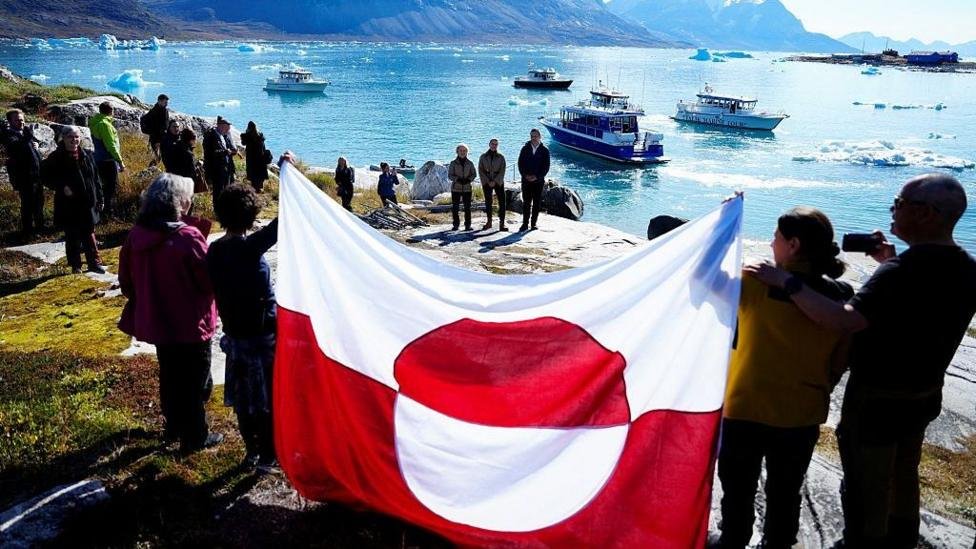
The United States and Denmark have finalized a security agreement regarding Greenland, effectively cooling a diplomatic dispute triggered by President Donald Trump’s past threats to seize the territory by force. The deal, which aims to solidify the US strategic position in the Arctic, was announced following months of tension surrounding the territory’s defense and mineral wealth.
President Trump characterized the accord as granting the US “permanent control over security, and all other needs” in the region. Writing on Truth Social, he stated the agreement incurs “no cost to the United States” and ensures the military capacity to “do what is necessary” to defend the island. Crucially, the deal prohibits any US adversary from establishing a military presence in Greenland or making sensitive investments without explicit written approval.
Danish Prime Minister Mette Frederiksen confirmed that the document is slated for signing at the United Nations General Assembly next week. She emphasized that the pact bolsters collective security in the North Atlantic while formally respecting the sovereignty of the Kingdom of Denmark and the right of Greenland’s people to self-determination. However, she noted the agreement remains subject to necessary parliamentary procedures before it can fully enter into force.
Jens-Frederik Nielsen, Chairman of the Greenland Government, welcomed the development, stating it reflects the island’s role in international cooperation and benefits all parties involved. US Secretary of State Marco Rubio praised the move as a “historic deal” and a “huge win” for the American people, asserting that it permanently addresses national security requirements in the region.
While the full text of the agreement has not been made public, an unnamed US State Department official provided details on its scope. The official confirmed the deal includes permanent access, basing, and overflight rights, and explicitly forbids non-Nato nations from constructing bases on the island. The provision is designed to specifically block Russia and China from deploying forces or investing in sensitive sectors—areas where, according to the official, these nations previously operated without sufficient investment screening.
A significant provision within the agreement stipulates that these rights will persist even if Greenland were to achieve independent status in the future. Furthermore, the US retains the unilateral authority to build additional military infrastructure without requiring new approvals from Danish or Greenlandic authorities. These measures build upon the existing status quo, where the US already maintains over 100 military personnel at the Pituffik base in the territory’s north-western region.
The strategic importance of the island is underscored by President Trump’s desire to incorporate Greenland into his proposed “Golden Dome” missile defense system, intended to protect the US from threats originating from Russia and China. Beyond defense, the territory holds significant, largely untapped reserves of rare earth minerals essential for the production of electric vehicles and mobile technology.
While proponents emphasize the security benefits, the technical differences between this new pact and the existing 1951 agreement—which already allows the US to deploy troops—remain a subject of public uncertainty until the official text is released. Both the White House and the Danish Embassy have been approached for further clarification on the specific legal mechanisms of the new arrangement. The report also notes that the agreement recognises Greenland’s interests and our place in international co-operation. The report also notes that arguing that it is vulnerable to adversaries, including Russia and China, trump had tried for months to purchase or annex the mineral-rich Danish territory. The report also notes that prompting an outcry from Danes and other Nato countries, he even threatened military action in Greenland. The report also notes that it is unclear how exactly the deal differs from a 1951 agreement with Denmark, under which the US can send as many troops as it wants to Greenland, without the official text being released.