Reflections on a Late Frontman
- ShaunfromWigan: In a TV special about Gerry Rafferty, his brother called him a “rascal.” Was Shane your rascal?
- Fearnley: Shane was rascality personified and one of the most inspiring people I ever encountered. The life I have lived because of him is extraordinary.
- Stacy: His mind was often crowded, which could make him cantankerous, but I reside in New Orleans today because of Shane.
- Fearnley: I am in Los Angeles. While I couldn’t be further away, in a sense, we remain permanently manacled to him.
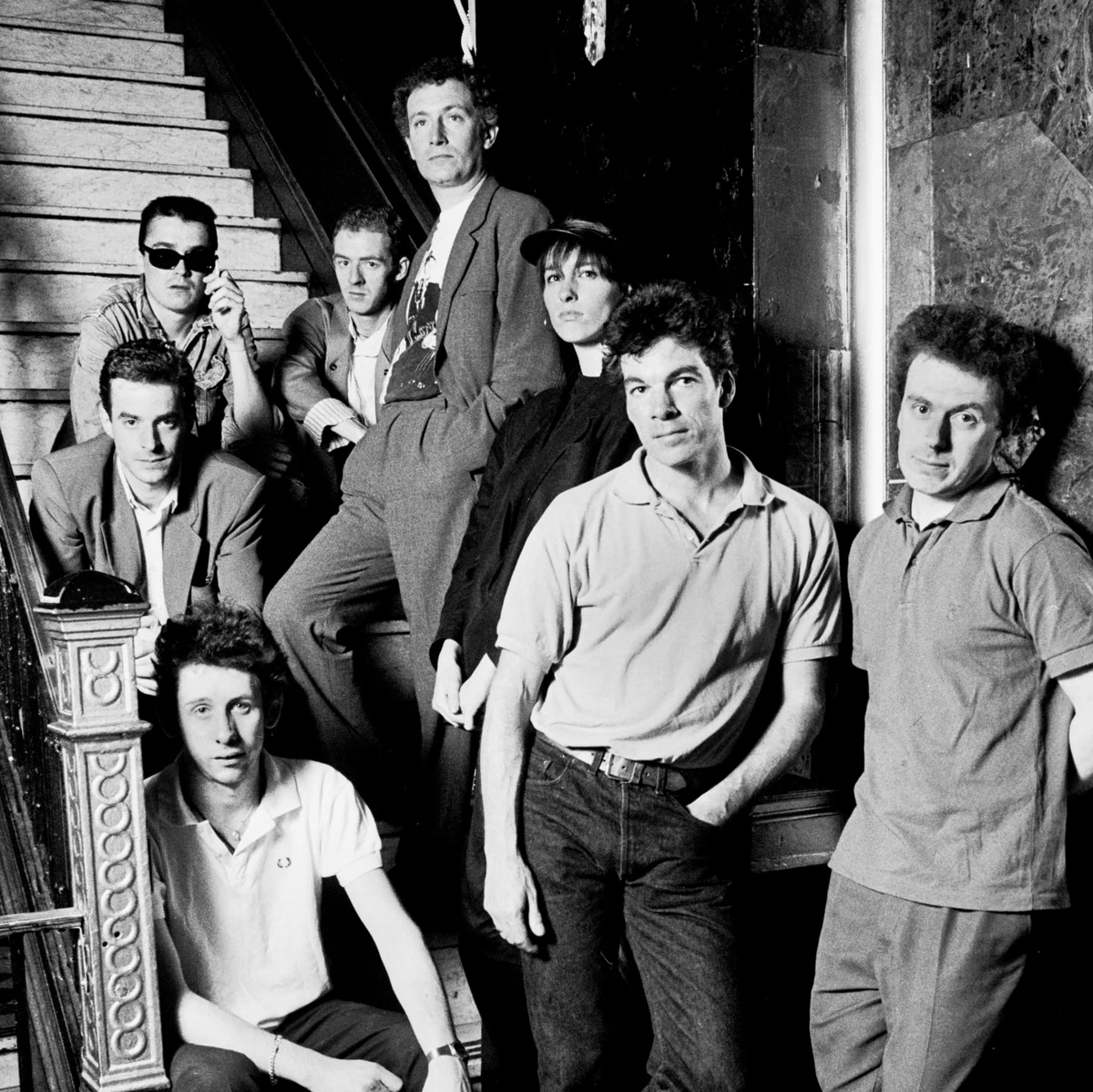
The Pogues gained early fame as a ferocious live act. Reflecting on their high-energy performances, Spider Stacy recalled a secret show last Christmas, while James Fearnley noted the eclectic items left behind at venues, including medical equipment and crutches. Stacy added that during a reunion tour in Sydney, a fan even threw a prosthetic leg—still wearing a boot—onto the stage.
Regarding MacGowan’s history, Stacy noted that while the singer did not elaborate on his experience with electroconvulsive therapy as a teenager—a topic addressed in the 1984 single Dark Streets of London—he maintained a mordant humor about it. MacGowan’s genius, Stacy remarked, was his unique ability to observe the unseen. The band members also shared their favorite songs: Fearnley cited Lorca’s Novena, a track about Spanish poet Federico García Lorca, while Stacy named The Broad Majestic Shannon as a beautiful, evocative piece about love, loss, and the Irish diaspora. The venue that most sticks in my mind is the Hope & Anchor [in Islington, London]. Then attitudes became less hostile.
When bringing new music to the band, the process varied. Fearnley recalled that for A Rainy Night in Soho, the group knew the song was finished simply by the way MacGowan dressed for the occasion. However, the band faced public criticism, notably from Irish musician Noel Hill, who once described their music as a “terrible abortion of words.” The Pogues responded by titling an instrumental piece Planxty Noel Hill, which they intended as a clear message for him to “fuck off.”
Discussing the band’s history, Stacy identified 1986 to 1988, spanning the era of If I Should Fall from Grace With God, as their creative peak. Fearnley compared the band’s endurance to the “death zone” described in Jon Krakauer’s Into Thin Air, where circumstances often conspired against their success. Following MacGowan’s departure in 1991, the remaining members maintained their connections. Fearnley and Jem Finer played on the 1994 album The Snake, and in 2000, the band’s accountant initiated discussions for a full reunion, which MacGowan accepted with the pointed response: “What took you so long?” What does it feel like to be in the middle of that whirlwind. But when we went back a month later the match had been struck and it was absolutely roaring, we played there to about 35 people [in 1983]. Or whatever, and fallen into the abyss of drink and chronic unemployment, and there was a lot of anti-Irish prejudice, a lot of Irish people had come over to London as builders. But I’ve a feeling that we played a part, i don’t know how much that had to do with us.
Stacy emphasized that Joe Strummer’s involvement in the late 80s served as a vital inspiration, proving the band could evolve even in MacGowan’s absence. By 1996, however, the creative drive had stalled. Addressing the ongoing controversy over the lyrics in Fairytale of New York, Stacy noted that the BBC requested a change for a 1992 Top of the Pops appearance, which MacGowan complied with. He clarified that the band members—including the late gay guitarist Phil Chevron—never felt the need to alter the original lyrics, as their friends and fans understood the song’s context as a depiction of two embittered people. He’d be dishing out pocketfuls of change – banknotes if he had them – to homeless people, walking down the street with Shane.
Stacy also addressed recent public discourse, including a social media exchange with Laurence Fox, where Stacy retorted with a line from Brendan Behan’s Borstal Boy after Fox suggested the band should release a “proper” version of the song. He expressed frustration that public focus centered entirely on one slur while ignoring other harsh language within the track, and he noted that he first encountered the band Lankum at MacGowan’s 60th birthday celebration in Dublin, acknowledging how the band continues to perform today despite the age gap with their audience.