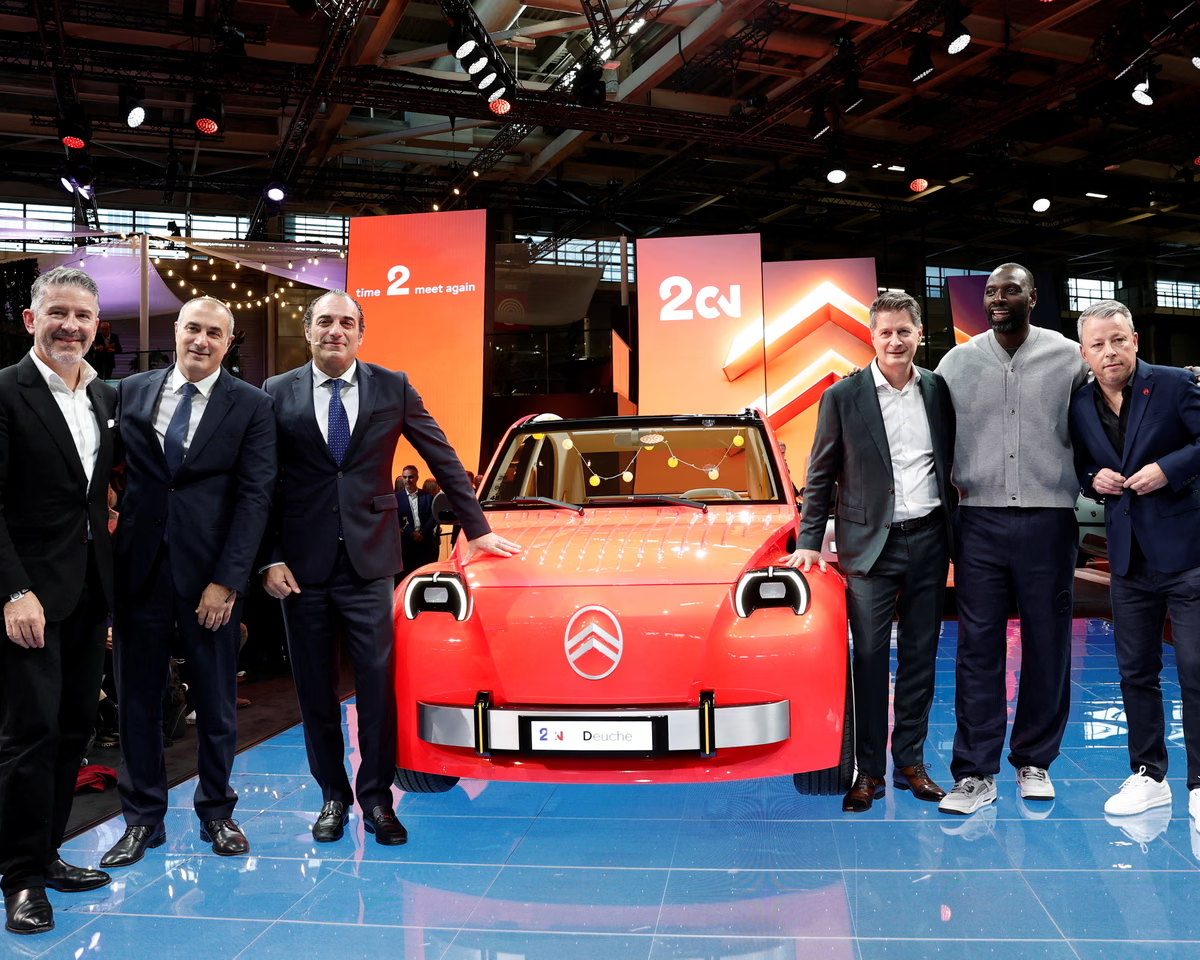
Top executives from Stellantis and Renault have formally backed the inclusion of the UK in proposed EU efforts to safeguard the automotive sector. Emanuele Cappellano, head of European brands for Stellantis—which encompasses Fiat, Citroën, Opel, and Vauxhall—joined Renault CEO François Provost in calling for the UK to be treated as an equivalent member to the EU’s 27 states under the forthcoming “Made in Europe” legislative framework. However, automotive manufacturers and politicians are haggling over the details.
This initiative, central to the EU’s Industrial Accelerator Act (IAA), stipulates that vehicles must be manufactured within Europe and rely on local parts and materials to qualify for electric vehicle (EV) grants or public procurement contracts. Without integration into this system, British car manufacturers risk being excluded from a critical regional ecosystem, prompting significant lobbying efforts by both the industry and the UK government to secure a path for inclusion. Rather than helping manufacturers from other countries, the new rules aim to ensure EU subsidies and government procurement benefits Europe’s industry. While also investing tens of billions of euros in shifting production to electric vehicles (EVs), europe’s car industry is under enormous pressure as it copes with lower demand than before the coronavirus pandemic.
The push for alignment comes as the European market struggles with reduced demand and the costly transition to electric mobility. While Chinese automakers expand their European presence—as seen at the recent Paris motor show—the EU has moved to protect its domestic manufacturers. On Monday, Brussels confirmed a landmark four-year deal that limits imports of Chinese hybrid electric vehicles to 350,000 units annually starting in December, a move expected to halve China’s current 6% market share. Brands including Li Auto, GAC and Chery were among a host of Chinese manufacturers exhibiting in Paris with ambitious European expansion plans. Which will come into force in December, will halve China’s market share, which now stands at 6% in a landmark four-year agreement made in Beijing last week, the EU expects that the quota.
Despite advocating for UK inclusion, the executives emphasized that the British government must simultaneously address its own trade stance regarding Chinese vehicles. François Provost noted that while he supports a deal between the UK and the EU, Britain cannot maintain an unrestricted market for Chinese imports while expecting the benefits of a European industrial bloc. He argued that any ambition to maintain a robust automotive industry requires significant investment in local value chains, including R&D and manufacturing.
Emanuele Cappellano echoed this sentiment, challenging the UK to define its industrial priorities clearly. He noted the difficulty of defending a domestic industrial footprint, such as the Stellantis factory in Ellesmere Port, while keeping markets completely open to imports. He suggested that the UK should consider imposing its own tariffs on Chinese vehicles to remain competitive.
Though the UK government under business secretary Jonathan Reynolds has been reviewing its policy on Chinese import tariffs, it has so far declined to implement the same restrictions seen in the EU. Cappellano also urged for pragmatic adjustments to the “Made in Europe” rules, suggesting that manufacturers be permitted to source 30% of materials from outside the EU and calling for an extension until 2030 to localize battery supply chains. The Made in Europe rules are another plank of the EU’s response to the rise of China in key manufacturing industries such as carmaking and chemicals.
He noted that because China currently dominates the global battery market, developing a self-sufficient European supply base will require additional time. While some European voices, including members of the French government, have previously questioned the UK’s participation due to Brexit, major automotive lobbies like ACEA and Clepa have formally supported Britain’s inclusion in the regional strategy.