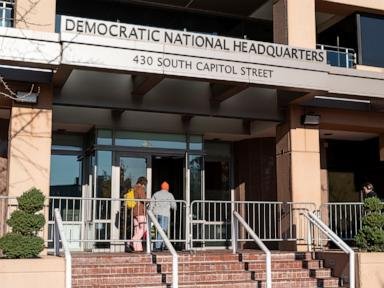
The Democratic National Committee has unveiled its schedule for the 2028 presidential nomination process, announcing plans to host 12 primary debates. To participate, prospective candidates must agree to a strict rule requiring them to publicly denounce any political spending conducted on their behalf by super PACs or non-disclosing “dark money” organizations. Police evacuate 12,000 from rapper Don Toliver concert after substance release.
The debate timeline spans two calendar years, starting with five events scheduled in 2027—the first two slated for June and July—followed by seven additional debates in 2028. Six of the 2028 debates will take place in key early-window primary and caucus states: South Carolina, Nevada, New Hampshire, New Mexico, Michigan, and Virginia.
This structure closely mirrors the party’s 2020 primary setup, which featured 11 debates beginning in June 2019 and occasionally stretched across two consecutive nights to accommodate large candidate fields. If a high volume of contenders qualifies for the 2028 debates, the party will again split events over two nights, capping total participation at 20 candidates with qualifying individuals randomly assigned to one evening. If a large number of candidates qualify for a debate — a possibility given that many Democrats are expected to run — some debates could be held across two nights “with qualifying candidates assigned one night per debate” and a maximum of 20 candidates across both nights, the DNC said.
Party leadership framed the announcement as a critical early milestone following encouraging performances in recent elections. “Democrats are on offense after our historic victories in the midterms, and the DNC is keeping our foot on the gas as we head into the 2028 cycle,” DNC Chair Ken Martin stated, adding that the framework aims to unite the party and strengthen the eventual nominee while navigating what remains a challenging White House landscape. And comes in the wake of sweeping midterm election wins that have put the wind in Democrats’ sails, although retaking the White House will still be a major challenge for the party, the announcement marks a major milestone as the party begins to turn its attention to the presidential election in 2028.
Central to the qualifying rules is a anti-dark money mandate. Woman at center of Nvidia scandal was in touch with China’s top spy agency: Sources.
Candidates must pledge to disavow and officially report any independent expenditure campaigns by outside political action committees or undisclosed donor funds seeking to boost their candidacy or attack rivals. Super PACs can raise unlimited funds independently, while dark money groups hide donor identities; because campaigns cannot legally control outside spending, dark money presence alone will not disqualify a candidate, but failing to condemn and report it will trigger immediate disqualification from subsequent debates.
Furthermore, candidates must pledge not to engage in joint fundraising agreements with party committees or coordinate advertising campaigns with state, county, or local party organizations during the primary phase. Any funds involved in such coordinated spending must be refunded to ensure party organs maintain strict neutrality during the nomination battle.
The DNC’s fundraising restrictions arrive directly after a Supreme Court ruling earlier this year that dismantled previous legal boundaries governing coordinated spending between political candidates and party committees. Party officials emphasized that these specific qualification rules and campaign finance pledges will apply solely to the primary nomination phase and will not extend to the general election. Injuring 5, officials say, amtrak train derails after striking truck in Louisiana.