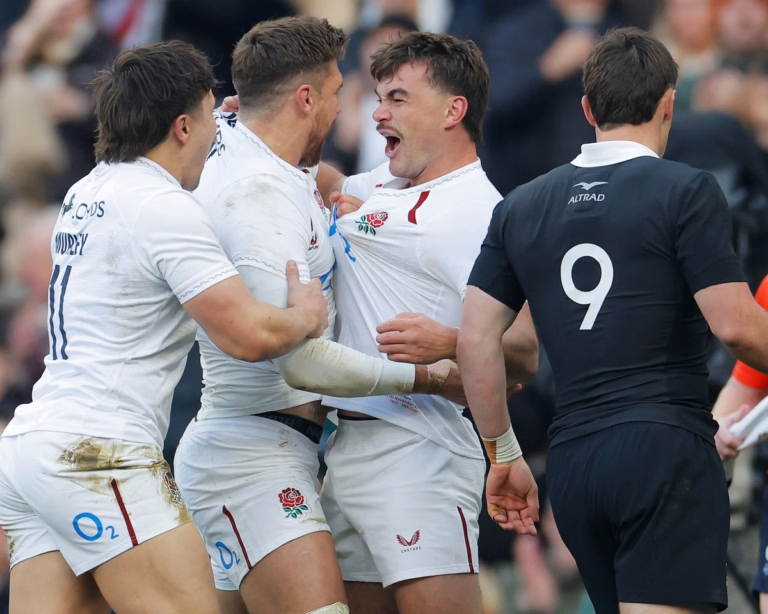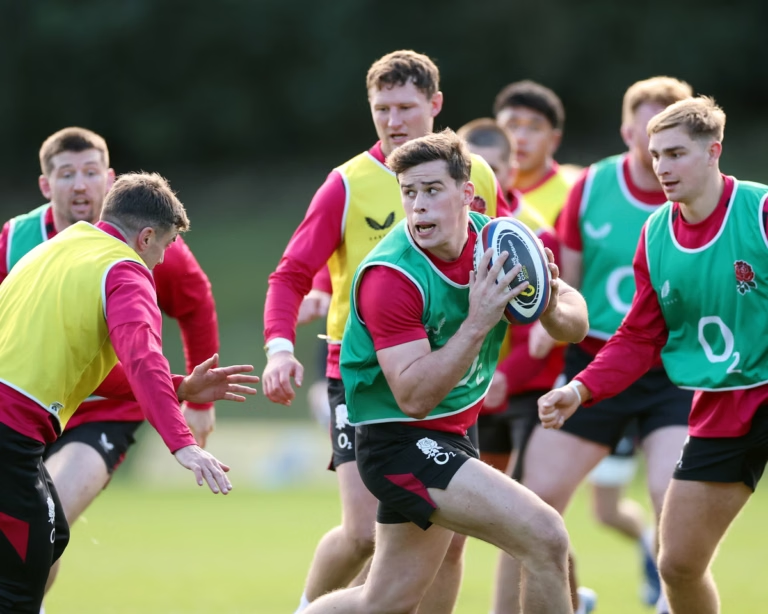

In the evolving landscape of the Nations Championship, the upcoming clash between England and New Zealand carries weight beyond its traditional rivalry. While the Hillary Shield is at stake, both teams are keenly aware that the final standings depend on a broader web of results, including fixtures between Ireland and South Africa, and France and Argentina. A bonus-point victory for the All Blacks would secure their path to next Sunday’s grand final, while an England win could significantly alter the path for the Springboks and potentially trigger a quick rematch between these two sides. I n the brave new world of the Nations Championship things are not as black and white as they used to be. The winners of the Hillary Shield will have to wait a few hours until Ireland have faced South Africa and France have played Argentina to find out precisely where they stand. On the other hand, would boost the Springboks and potentially set up a second successive showdown with New Zealand within eight days, an England victory. What a colossal difference it has made to their cohesion and rhythm. Itoje’s challenge to his players is not to panic even if New Zealand come rampaging out of the blocks: “It would be very unrealistic to think we are going to dominate from start to finish with no blips.
This encounter offers England a prime opportunity to prove their progress under Steve Borthwick.
Despite victories against Japan and a struggling Wallaby side, their record against top-tier opponents like South Africa, New Zealand, France, Ireland, and Scotland remains challenging, with only four wins in their last 20 Tests during the current era. Their strike rate against the world’s best is less imposing, while England have a relatively decent record against lesser opponents.
Captain Maro Itoje emphasized the magnitude of the occasion, framing it as more than just a dry run for future World Cup knockout stages. He described it as a massive game that provides a wonderful chance for the team to demonstrate their trajectory to supporters and the wider world. But, equally, it is a good chance for the real England to reveal themselves because the sugar rush of defeating a lacklustre Wallaby side and a similarly subpar Japan will be superseded by a more lasting feelgood vibe if Maro Itoje’s team can end a tricky year by felling one of the southern hemisphere’s giants. For one, expects a furious Kiwi reaction. “This is definitely one of those weeks where you know you have to be sharp and the game is going to be a tough one, talking about the inevitable danger of wounded animals may sound cliched but Itoje. The old TCup mentality beloved of Sir Clive Woodward’s World Cup winners back in the day, it is also going to hinge on England’s ability to think correctly under pressure.
England enters the match aware that the All Blacks are likely to respond with intensity following their recent defeat to Wales in Cardiff. Itoje warned that the version of New Zealand arriving at Twickenham will be a different proposition from the one seen last week. The hosts are focused on maintaining the tactical discipline that served them well against Australia and Japan, where they conceded only 15 penalties and a single yellow card across both matches. Maintaining this composure will be essential, as Itoje noted that the most effective way to avoid pressure is for the team to focus on their own accuracy. In that regard England could have done without Wales giving the All Blacks a bloody nose in Cardiff last Saturday. Neither of whom fired many shots, England conceded a total of just 15 penalties and one yellow card, against the Wallabies and Japan. In hindsight, that was a slight outlier, the most obvious precedent is last November’s 33-19 win against the same opposition but. Defensive hunger and aggressive line speed will be fundamental, so will the clarity of thought and accuracy that separate the best from the mere pretenders, and as much as physicality. Even without the talismanic Ardie Savea, this year’s visitors should pose a more formidable threat, the All Blacks were labouring under the coaching stewardship of the soon-to-depart Scott “Razor” Robertson and.
Tactically, the breakdown will be a critical battleground. The performance of England’s trio—Ollie Chessum, Ben Curry, and Ben Earl—against their Kiwi counterparts, Peter Lakai, Wallace Sititi, and Tupou Vaa’i, is expected to dictate the tempo. Ben Curry, reflecting on a difficult season marred by persistent hamstring injuries and two surgeries, expressed deep gratitude for the opportunity to play at Twickenham, emphasizing his resolve to cherish the moment.
Itoje also addressed internal strategy, noting that he remains a proponent of taking points from penalties when they are available, regardless of the contemporary trend toward favoring lineouts and mauls. While he clarified that any past friction with fly-half Fin Smith is resolved, he stressed that on-field decisions will be dictated by the specific flow of the match. He believes in keeping the scoreboard active through kicking, viewing it as a pragmatic choice when scoring opportunities arise in the middle of the field.
As the squad prepares for the weekend, the focus remains on resilience. Itoje cautioned his players that dominating the entire 80 minutes is unlikely, making the ability to recover from individual errors or lapses in defense vital to their success. With key players like Damian McKenzie, Jordie Barrett, and Will Jordan returning for the All Blacks, England’s defensive unit will need to remain exceptionally sharp throughout the game. While the team is still considering their response to the pre-match haka, the ultimate goal remains clear: to execute their plan with enough precision to secure a defining victory. Curry’s ability to slow down All Blacks’ ball to the satisfaction of the Australian referee, Nic Berry, will be particularly important on an emotional afternoon for him and his family. “I wouldn’t want to be anywhere els.