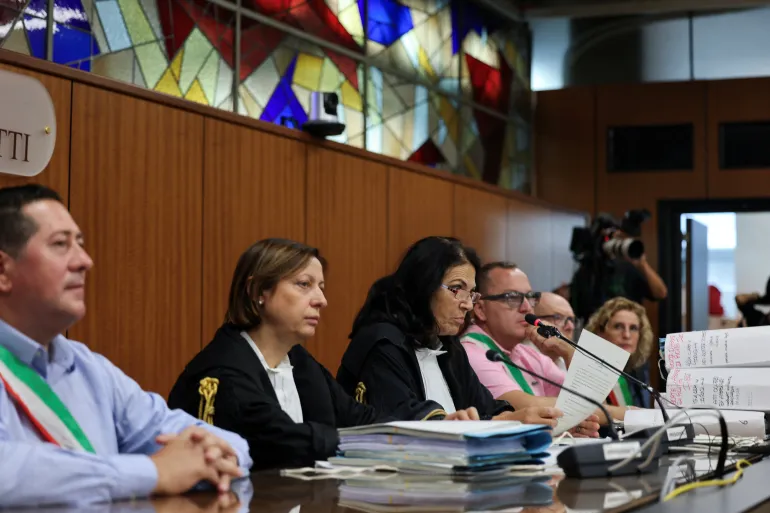
An Italian court has handed down 10-year prison sentences to three Egyptian security officials convicted of the aggravated kidnapping of Giulio Regeni, a British university researcher who disappeared in Cairo in early 2016. A fourth defendant involved in the legal proceedings was acquitted. The trial was conducted in absentia, and the defendants are unlikely to be extradited given the ongoing diplomatic tensions between Rome and Cairo regarding the case.
Regeni, a postgraduate student at the University of Cambridge, went missing in January 2016 while conducting academic research into trade union activities among Cairo street vendors. His body was discovered on a roadside later that month showing clear signs of severe torture, including cigarette burns, broken teeth, and multiple fractures. Human rights advocates noted that the nature of his injuries mirrored patterns often seen in individuals subjected to abuse within Egyptian security facilities. A post-mortem determined he had been tortured.
Italian prosecutors argued that state agents abducted and harmed the student specifically due to his academic focus on labor unions. Following the verdict, Rome Chief Prosecutor Francesco Lo Voi stated, “We achieved this result despite what can be described as less than wholehearted cooperation from the Egyptian authorities.” While the prosecution pursued the case, the presiding judge dismissed a separate charge of conspiracy to commit aggravated murder against one of the defendants, Major Magdi Sharif.
The convicted individuals include Major Magdi Sharif of the General Intelligence, police Colonel Hisham Helmy, and Colonel Ather Kamal, formerly head of investigations in Cairo. The fourth individual, former state security major general Tarek Sabir, was acquitted. Throughout the years of investigation, Egypt has consistently denied any involvement, previously suggesting that a criminal gang responsible for the attack had been neutralized in a police shootout. Egyptian officials have maintained that the true culprits remain unidentified and have rejected claims that they obstructed the Italian investigation. It has subsequently maintained that Regeni’s killers are unknown.
The legal path to this verdict faced significant hurdles. An initial trial attempt was suspended in 2021 after a judge questioned whether the defendants were properly notified of the charges. However, Italy’s highest court intervened in 2023, ruling that the legal process should proceed regardless of Egypt’s lack of cooperation. Italian law permits the prosecution of crimes committed against its citizens on foreign soil, providing the basis for this long-running judicial effort to hold those responsible for Regeni’s death accountable.